Introduction
For many, PRP feels like the perfect middle ground: no harsh chemicals, no surgery, just your own blood reintroduced to kickstart regeneration. It sounds safe, almost too safe. And yet, if you’ve ever walked out of a clinic with a bruised vein from a routine blood test, you’ll know even simple procedures carry small but real risks. PRP is no different.
The problem is that most marketing glosses over the uncomfortable details. You’ll see glowing before-and-after photos, but not the redness that lingers for days, or the tenderness that makes brushing your hair awkward after scalp injections. And very rarely, there are more significant complications: infections if sterility is compromised, pigmentation changes in certain skin types, and even nerve irritation if the needle penetrates too deeply. They’re not common, but they’re not impossible either.
Why does this matter? Because informed choices are safer choices. Knowing what to expect doesn’t make PRP less appealing; it makes it more trustworthy. If you understand why mild swelling is typical, or why stopping ibuprofen before treatment matters, you’re already halfway to a smoother recovery. And if you know the red flags that mean “call your clinician now”, you’re far less likely to panic or ignore symptoms that need quick attention.
This guide doesn’t aim to scare you off PRP. Quite the opposite. It’s here to help you see the whole picture: the everyday side effects, the rare risks, and the smart steps that minimise both. That way, when you sit in the chair, you do so with confidence rather than crossed fingers.
What exactly can you expect after PRP, and when should you be concerned?
Cellenis PRP
Not all PRP systems are created equal — and the quality of preparation makes a big difference to outcomes. That’s why many leading clinics choose Cellenis® PRP, a clinically validated system designed to deliver highly concentrated, pure platelet-rich plasma every time. By using a closed, sterile kit and advanced centrifugation, Cellenis® ensures consistency, safety, and optimal platelet yield — the growth factors your skin, hair, or tissue rely on for regeneration. Whether the goal is brighter skin, fuller hair, or faster recovery, Cellenis® PRP offers practitioners and patients confidence in both the science and the results.
Visit Website
What Is PRP And Why Is It Considered Safe?
If you’ve been researching natural ways to improve skin texture, restore thinning hair, or recover from injury, you’ve likely come across Platelet-Rich Plasma (PRP) therapy. It’s widely used across aesthetics, sports medicine, and orthopaedics, and praised for being practical and low-risk.
A natural treatment derived from your blood
- PRP stands for Platelet-Rich Plasma, a concentrated solution from your blood rich in healing platelets and growth factors.
- These platelets are responsible for helping the body repair itself. When concentrated and reinjected, they stimulate regeneration at a cellular level.
- Because PRP is 100% autologous (from your own body), the risk of allergic reaction or rejection is significantly lower than synthetic or donor-based treatments.
Used in medicine long before aesthetics
- While PRP is now popular in cosmetic procedures, it’s not new. It was first used in the 1970s in surgery and later adopted in sports injury clinics and dental medicine.
- Its medical roots lend credibility: PRP has been studied and refined for decades in contexts requiring sterility, safety, and clinical precision.
Minimal additives and low risk of complications
- Most PRP systems involve no added chemicals or preservatives — just a small amount of anticoagulant to stop clotting during preparation.
- Because nothing foreign is introduced, side effects are usually limited to mild swelling, bruising, or tenderness at the injection site.
- Proper technique and hygiene make the risk of infection or serious complications extremely low.
Trusted across multiple disciplines
- PRP is now commonly used by dermatologists, plastic surgeons, pain specialists, and fertility experts.
- Its appeal lies in its versatility and safety — it can be tailored to various treatment goals, from collagen stimulation to joint repair.
In short, PRP’s reputation for safety is backed by science, history, and clinical success. It’s not a miracle cure, but when performed correctly by a qualified practitioner, it offers natural results with minimal risk.
Common Side Effects Of PRP Therapy
PRP therapy is considered a safe, minimally invasive treatment with low complication rates, but that doesn’t mean it’s completely free of side effects. Understanding what’s normal and what's not can help you feel more prepared and make recovery smoother.
Mild, short-term effects are the most common.
Most people experience only minor reactions, typically subside within a few days. These are not signs of something “going wrong” but part of the body’s natural healing response.
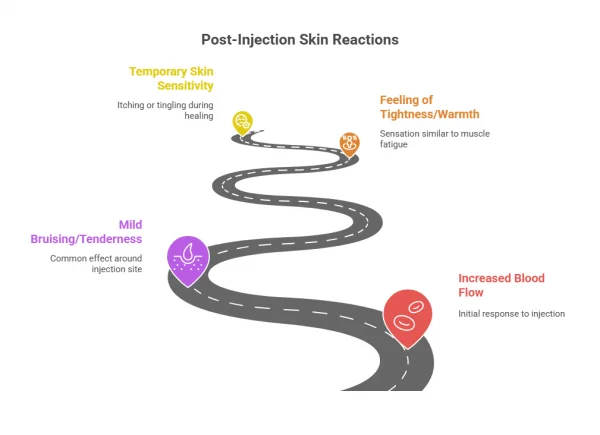
- Redness and swelling at the injection site
A common effect due to increased blood flow and tissue response. This usually resolves within 24–48 hours.
- Mild bruising or tenderness
Especially around the face or scalp, where the skin is thinner. Gentle icing and arnica cream can help reduce any discolouration.
- A feeling of tightness or warmth
This can occur in the treated area shortly after injection. It’s often described as similar to post-exercise muscle fatigue and typically fades within a day.
- Temporary skin sensitivity
You might notice slight itching or tingling as the area heals. Avoid touching, exfoliating, or applying active skincare products during this phase.
Side effects vary depending on the treatment area.
- Facial PRP treatments may cause puffiness, especially around the eyes or lips, lasting 48–72 hours.
- Scalp injections for hair restoration may lead to tenderness or sensitivity when brushing hair for the first couple of days.
- Joint and musculoskeletal PRP may cause temporary soreness or stiffness as the healing cascade begins.
When to be cautious
While complications are rare, knowing what to look out for is essential. If you notice significant pain, increasing redness after 48 hours, pus, or flu-like symptoms, contact your clinician promptly — these could be early signs of infection or an inflammatory response.
In nearly all cases, side effects are mild, manageable, and part of the body’s regenerative process. Choosing a qualified, experienced practitioner is the best way to ensure your treatment is effective and safe.
Less Common But Possible Risks Of PRP Therapy
While PRP therapy is generally low-risk and well-tolerated, it’s essential to acknowledge the less common complications that can occasionally arise. These are not typical, but understanding them empowers you to make informed decisions and know what to watch for during your recovery.
Rare but noteworthy reactions that may occur
Although unlikely, some individuals may experience side effects beyond the usual mild swelling or tenderness. Here’s what to be aware of:
- Prolonged inflammation
It’s normal for the treated area to feel slightly warm or swollen. However, persistent redness, heat or pain that worsens beyond 48 hours could indicate an inflammatory response that needs medical attention.
- Infection at the injection site
While sterile technique minimises the risk, there’s a slight chance of bacterial contamination any time the skin is punctured. Look for signs such as increasing pain, yellow discharge, or a fever.
- Allergic or hypersensitivity reactions
PRP is made from your blood, so an allergic reaction is rare. However, an allergic response is possible if your treatment includes additives (like anticoagulants or activating agents). Always inform your practitioner of any sensitivities or past reactions.
- Dizziness or fainting
Some individuals feel light-headed following the blood draw or injections, especially if they’re nervous or haven’t eaten. This is usually short-lived and can be avoided with good hydration and rest.
- Skin discolouration or pigmentation changes
In rare cases, temporary hyperpigmentation can occur in individuals with darker skin tones. Proper aftercare and sun protection can reduce this risk.
- Tissue irritation or nerve sensitivity
If the injection is placed too deeply or close to a nerve, temporary numbness or tingling may follow. This is uncommon and usually resolves without intervention.
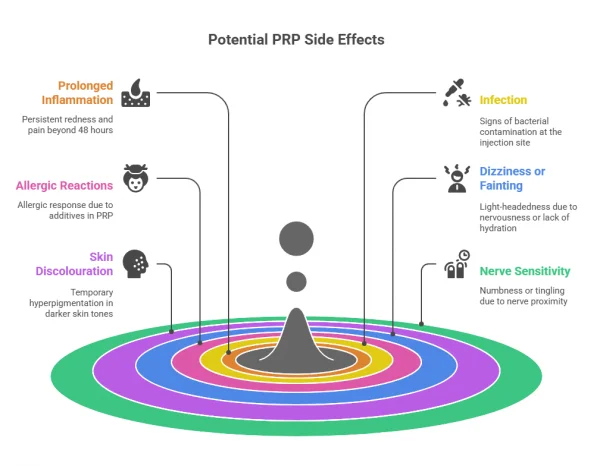
Although these risks are rare, they underscore the importance of choosing an experienced practitioner with a strong medical background in PRP therapy. A skilled injector will know how to avoid vascular structures, minimise trauma, and tailor the treatment to your skin profile.
PRP is considered safe for most patients, but as with any medical procedure, a personalised consultation is key.
Rare Complications And Medical Red Flags In PRP Therapy
PRP therapy is considered safe, primarily when performed by qualified professionals. But no treatment is entirely without risk. A few rare complications have been reported, and while these are uncommon, knowing the warning signs ensures you’re better prepared.
Recognising rare complications early can prevent serious outcomes
In expert hands, serious PRP-related complications are exceedingly rare. Still, being aware of red flags allows you to act quickly if something doesn’t feel right.
- Vascular compromise or unintended injection into blood vessels
Very rare, but potentially serious. It could impair blood flow if PRP is accidentally injected into or too close to a blood vessel, especially in high-risk areas like the glabella (between the brows). Symptoms include sudden, severe pain, skin blanching, or discolouration.
- Vision changes or visual disturbance
There is one documented case of temporary vision loss following PRP injection near the eye area. While highly unusual, any change in vision following treatment is a medical emergency and should be assessed immediately.
- Nerve damage or altered sensation
Injection too close to a nerve can lead to tingling, numbness, or prolonged sensitivity. Most cases resolve naturally, but persistent symptoms warrant professional follow-up.
- Persistent infection or abscess formation
Infection risk is low with proper aseptic technique, but not zero. A spreading area of redness, increasing pain, or a pus-filled swelling should be seen by a clinician without delay.
- Skin necrosis (extremely rare)
If the blood supply is compromised, it may lead to tissue damage or loss. Early signs include blackening of the skin or a wound that doesn’t heal. This requires urgent treatment.
While rare, severe complications such as infection and vascular occlusion, including cases of vision loss due to inadvertent arterial injection, have been documented in medical literature (Latalski et al., 2024). Preventative protocols and practitioner training are critical to mitigating these risks.
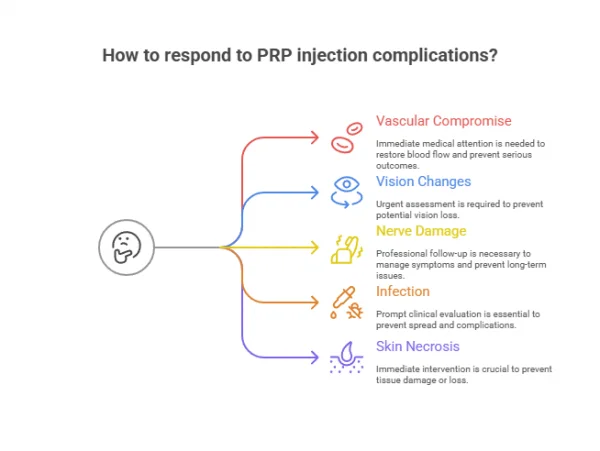
These scenarios are not typical and should not discourage you from exploring PRP if you’re a good candidate. The key takeaway is that rare doesn’t mean impossible — and prompt recognition is your best defence.
In the hands of an experienced, medically trained provider, PRP therapy remains a low-risk option with an excellent safety record. However, as with any procedure, knowledge and vigilance are part of informed care.
Who Should Avoid PRP Therapy?
While Platelet-Rich Plasma (PRP) therapy is safe for most people, it’s not suitable for everyone. Understanding who shouldn’t undergo PRP treatment is crucial for protecting your health and ensuring the best possible outcome.
Certain health conditions and lifestyle factors can make PRP unsuitable
A thorough consultation with a medically trained practitioner will always include reviewing your medical history, and for good reason. PRP may be natural, but there are specific scenarios where it’s best avoided.
- Blood or platelet disorders
If you have a low platelet count (thrombocytopenia), clotting issues, or platelet dysfunction syndrome, PRP may not deliver the intended regenerative benefits and could increase the risk of complications.
- Active infection or skin disease at the treatment site
Injecting PRP into inflamed or infected skin can worsen the condition and may even spread bacteria deeper into the tissue.
- Chronic liver disease
The liver is key in producing proteins needed for healthy blood clotting. If liver function is compromised, the efficacy and safety of PRP may be affected.
- Cancer (especially haematological cancers)
Because PRP promotes cell growth and tissue regeneration, it’s generally not recommended for individuals with active cancers, particularly blood cancers like leukaemia or lymphoma.
- Autoimmune disorders
People with conditions such as lupus or rheumatoid arthritis may have unpredictable immune responses to PRP, and the therapy may trigger flare-ups in some cases.
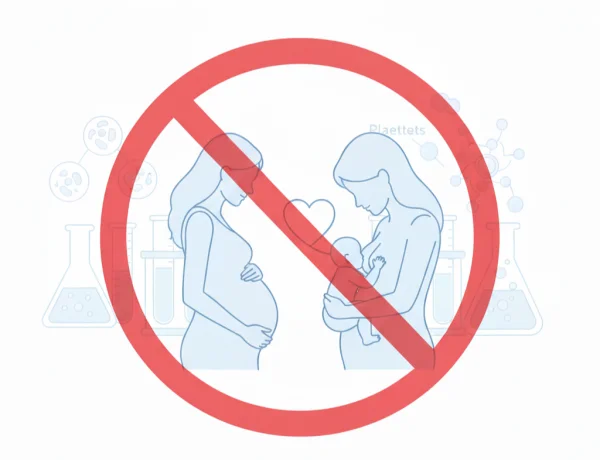
- Pregnancy or breastfeeding
While there's no direct evidence of harm, most practitioners will advise against elective PRP treatments during pregnancy or breastfeeding, simply as a precaution.
- Use of anticoagulant medications
Blood thinners such as warfarin or aspirin can interfere with PRP’s clotting properties and increase the risk of bruising or bleeding.
- Heavy smoking, alcohol use, or poor nutrition
These lifestyle factors can impair your body’s ability to heal and regenerate, reducing the overall effectiveness of PRP therapy.
While PRP is widely praised for being low-risk and autologous (from your body), it’s not universally appropriate. A high-quality consultation is your first defence in making the right decision for your health and appearance.
How To Minimise Risk And Maximise Safety With PRP Therapy
PRP therapy is generally safe, but as with any medical treatment, the outcome depends on preparation, practitioner expertise, and proper aftercare. Making informed choices before, during, and after your treatment can enhance results while reducing potential complications.
Wise choices and simple steps that support a smoother recovery
Whether you’re seeking PRP for skin rejuvenation, hair loss, or joint support, here’s how to optimise your safety at every stage.
Before your treatment
- Choose a qualified medical professional
. Always select a practitioner with formal medical training and specific experience in PRP procedures. Look for GMC registration or similar credentials.
- Have a detailed consultation.
A reputable clinic will review your medical history, discuss medications, and assess your suitability for treatment, not rush you in for a same-day injection.
- Avoid anti-inflammatories and alcohol
. NSAIDs (like ibuprofen or aspirin) and alcohol can impair platelet function. Ideally, stop using them 48–72 hours before and after treatment, unless prescribed by your doctor.
- Stay well hydrated and nourished.
Proper hydration improves blood draw quality, and a balanced diet supports tissue repair.

During the procedure
- Ask about sterile protocol.s
Inquire about the clinic’s hygiene standards, including how equipment is sterilised and whether single-use needles and tubes are employed.
- Ensure ultrasound guidance for musculoskeletal PRP.
If you're being treated for joint or tendon issues, ultrasound guidance increases precision and reduces the risk of misplaced injections.
After your treatment
- Follow aftercare instructions closely.
Avoid vigorous exercise, excessive sun exposure, saunas, and skincare actives for 24–72 hours, depending on the area treated.
- Watch for unusual symptoms
. Mild redness, swelling, or discomfort is normal. However, increasing pain, heat, or discolouration could indicate infection — contact your clinician promptly.
- Resist the urge to ‘speed up’ healing.
The body needs time to regenerate. Don’t combine PRP with too many other treatments unless recommended.
PRP can be a safe and rewarding option with proper planning and expert guidance. The key is treating it with the same care and respect as any medical procedure, because that’s precisely what it is.
Effective complication management begins with strict adherence to sterile protocols and comprehensive PRP training, including certification recognised by the JCCP (Joint Council for Cosmetic Practitioners), as outlined by Acquisition Aesthetics UK. These measures are pivotal in ensuring patient safety and optimising treatment outcomes.
Conclusion
PRP therapy holds real promise—but like any aesthetic treatment, it isn’t one-size-fits-all. While most patients experience only mild, temporary side effects, it’s essential to recognise that rare complications can occur, especially when the treatment isn’t tailored to your health needs or delivered by an experienced professional.
If there’s one thing to take from this, being informed is just as crucial as being curious. Knowing who should avoid PRP, what to expect post-treatment, and how to minimise risk empowers you to make the kind of decision that feels right, not rushed.
If you’re considering PRP, the next step is simple: speak to a medically qualified practitioner who can assess your skin, health, and goals in detail. Personalised guidance will always outweigh guesswork, and your skin deserves nothing less.
Are You A Clinic Offering PRP?
Whether you're already using PRP or thinking about adding it to your treatment menu, here's how to make the most of it.
Get Found by Patients Searching for PRP Near Them
List Your Clinic on the UK's Most Trusted Aesthetics Platform - from Just £20/month inc. VAT
Patients searching for PRP in their area come to ConsultingRoom.com to find trusted, verified clinics. If your clinic isn't listed, you're invisible to them.
Membership is just £20 per month including VAT - and based on the average client value in aesthetics, just one new patient every three years covers your entire membership fee. Everything after that is pure profit.
Your membership includes a professionally built clinic profile, SEO-optimised to appear in local searches, plus access to 50+ business and marketing tools, lead tracking, and compliance support.
Register Your Clinic - from £20/month
Not Yet Offering PRP? There's Never Been a Better Time to Start
Exclusive Starter Kit Offer from Our Official Partner, Aesthetic Medical Partnership
Cellenis® PRP is one of the most in-demand regenerative treatments in UK aesthetics right now - and patients are actively choosing clinics that already offer it. If it's not on your treatment menu yet, you're missing bookings.
Our partner, Aesthetic Medical Partnership (AMP UK), supplies the Cellenis® PRP system and has put together a special starter package exclusively for clinics coming through ConsultingRoom.com. The starter kit includes everything you need to begin treating patients from day one, including a centrifuge.
No hard sell, no commitment - just straightforward advice.
Claim the Special Offer from AMP UK